
Last updated September 23, 2026
Free visual inspection and a written scope of work before any mitigation begins - photos, moisture readings, and drying logs go in your claim file
The scope we write is the scope we bill. Anything new gets shown to you, in writing, before we touch it.
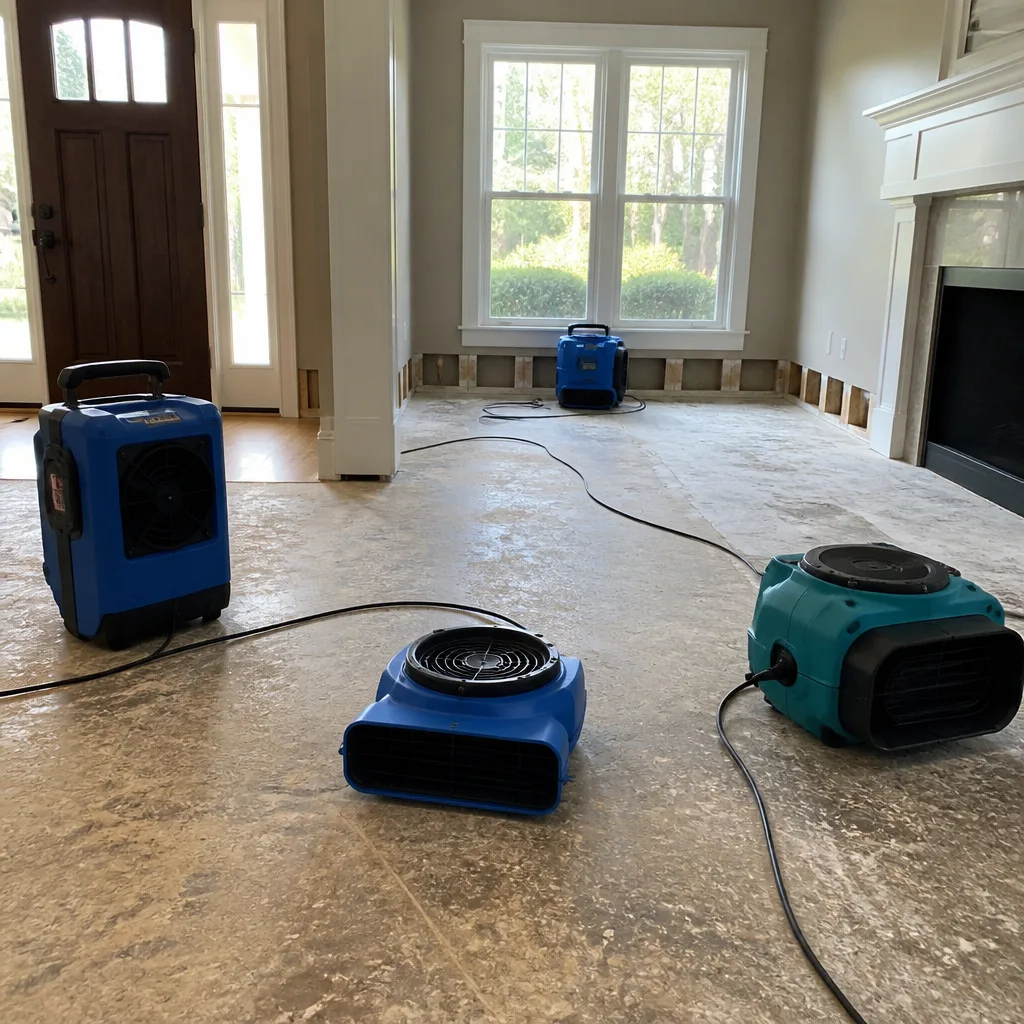

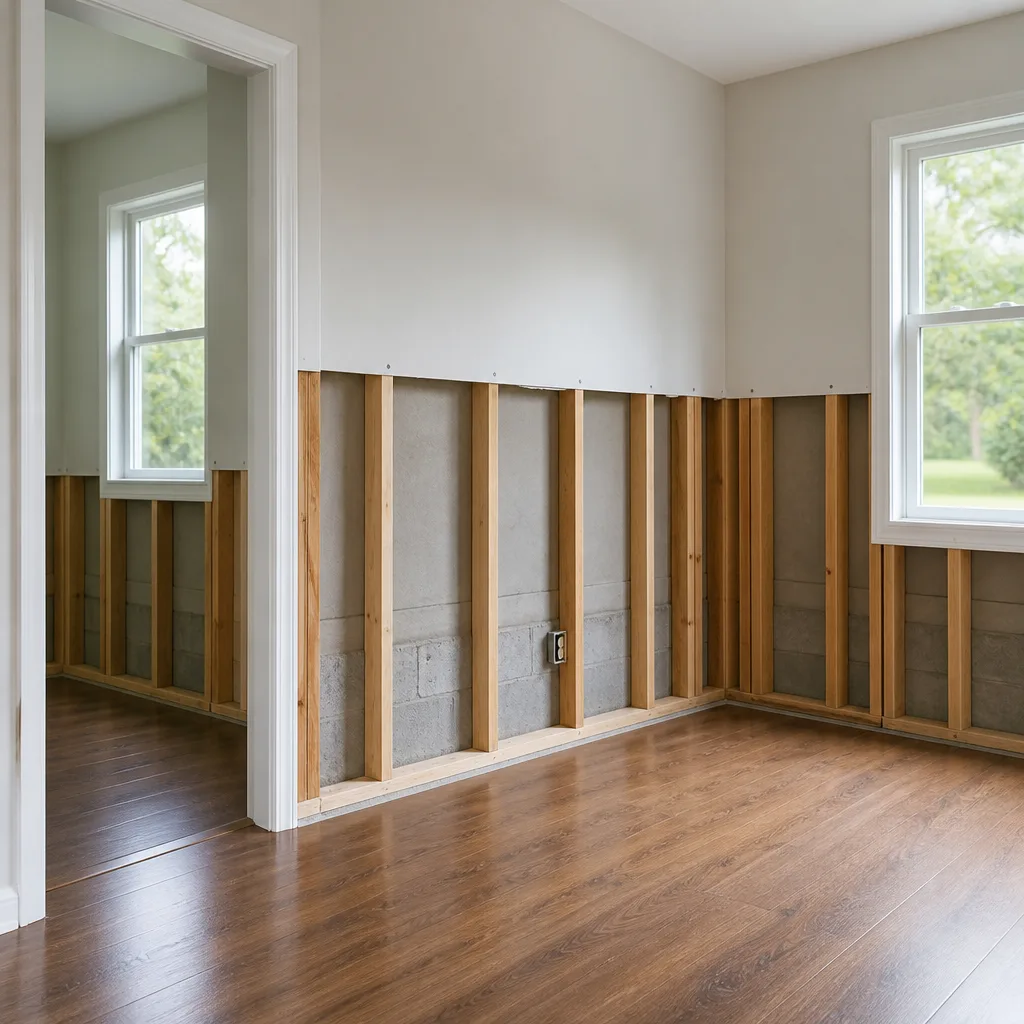

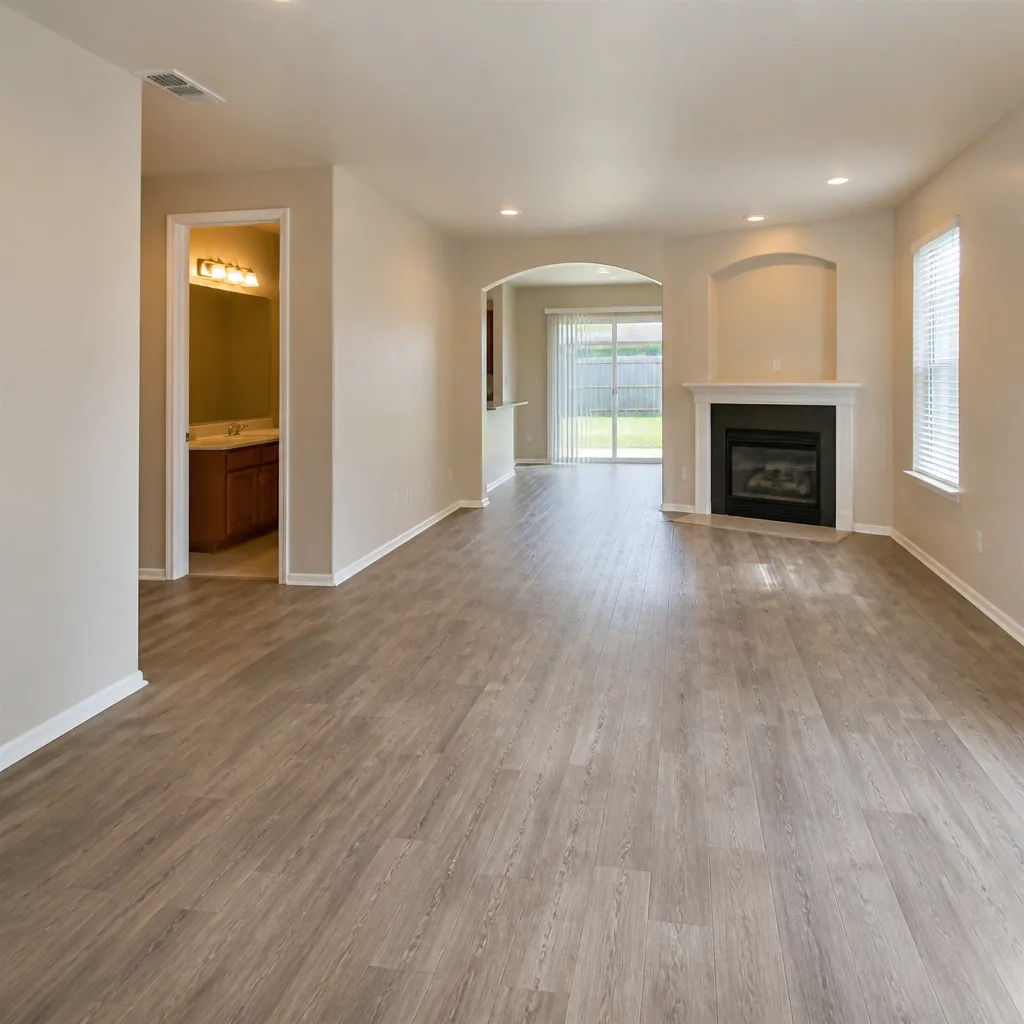
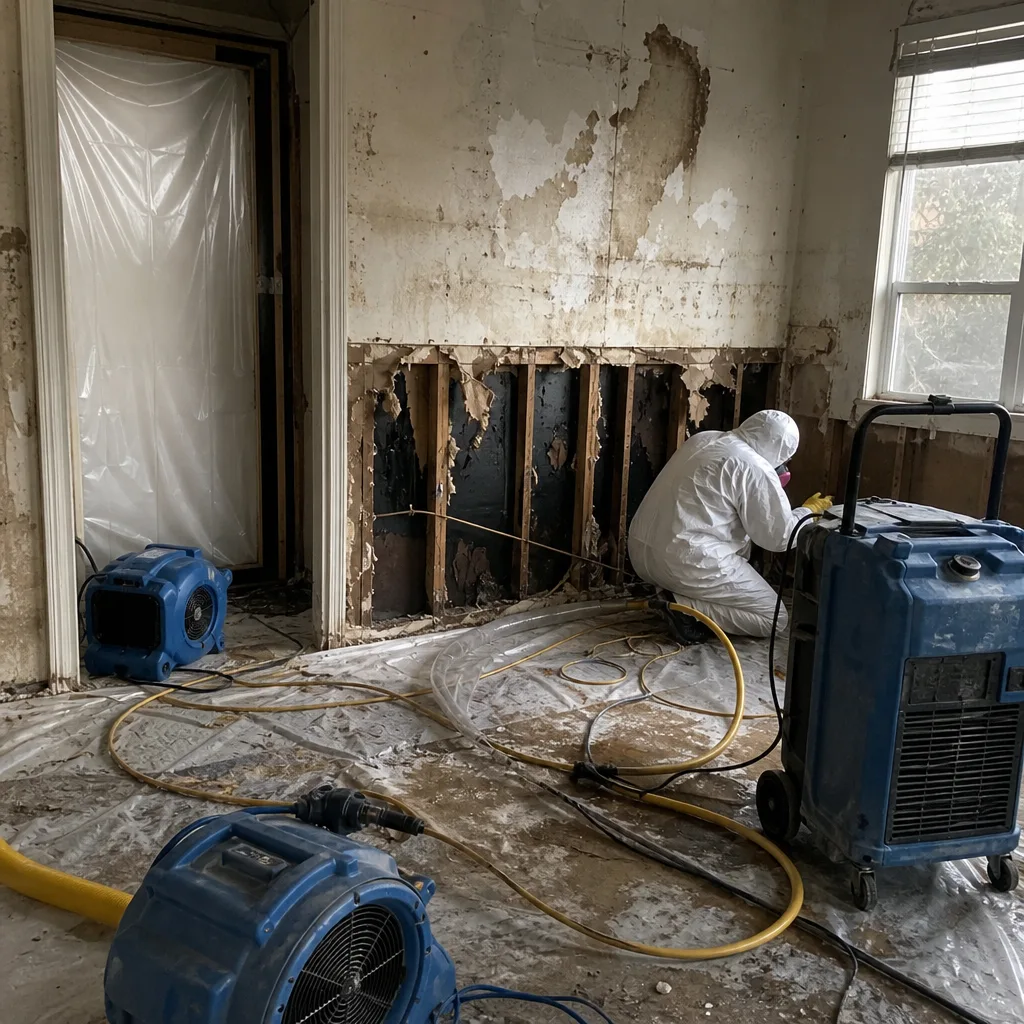 Before
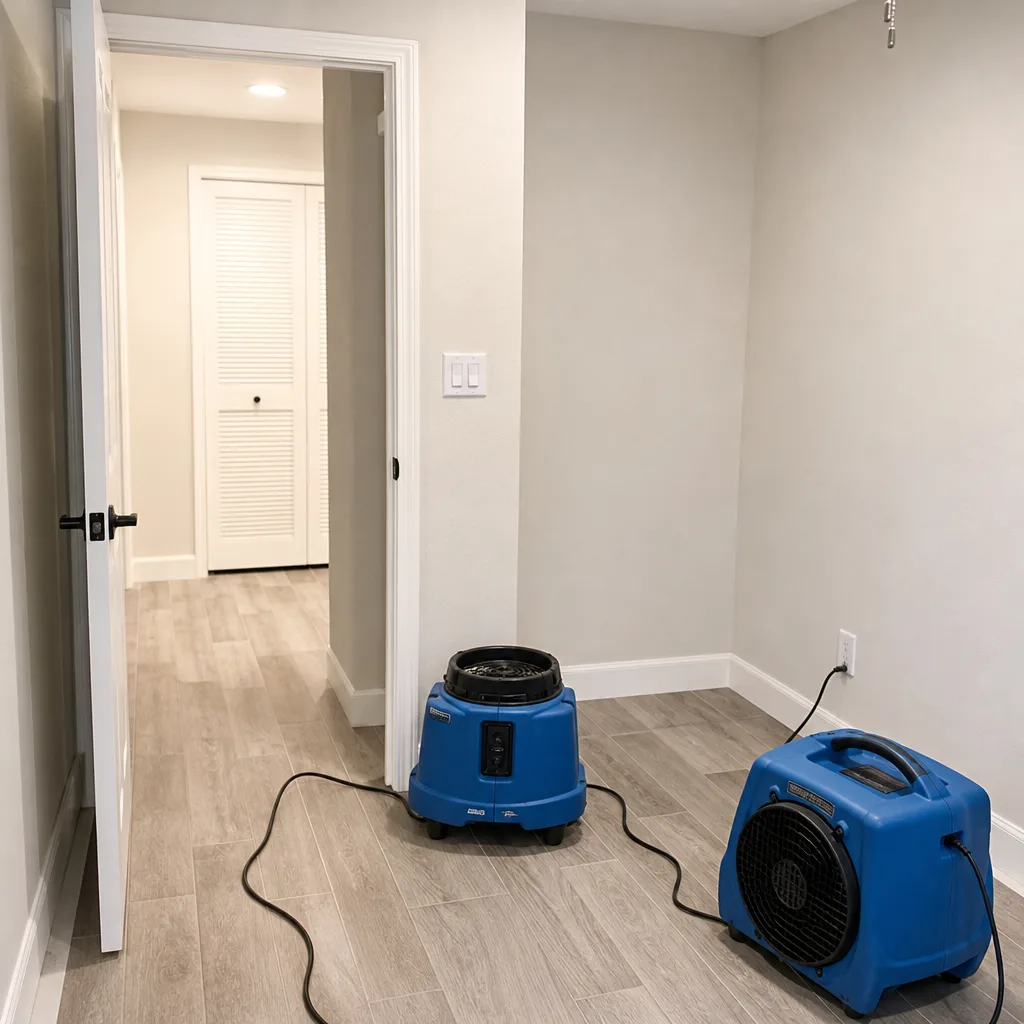 After
After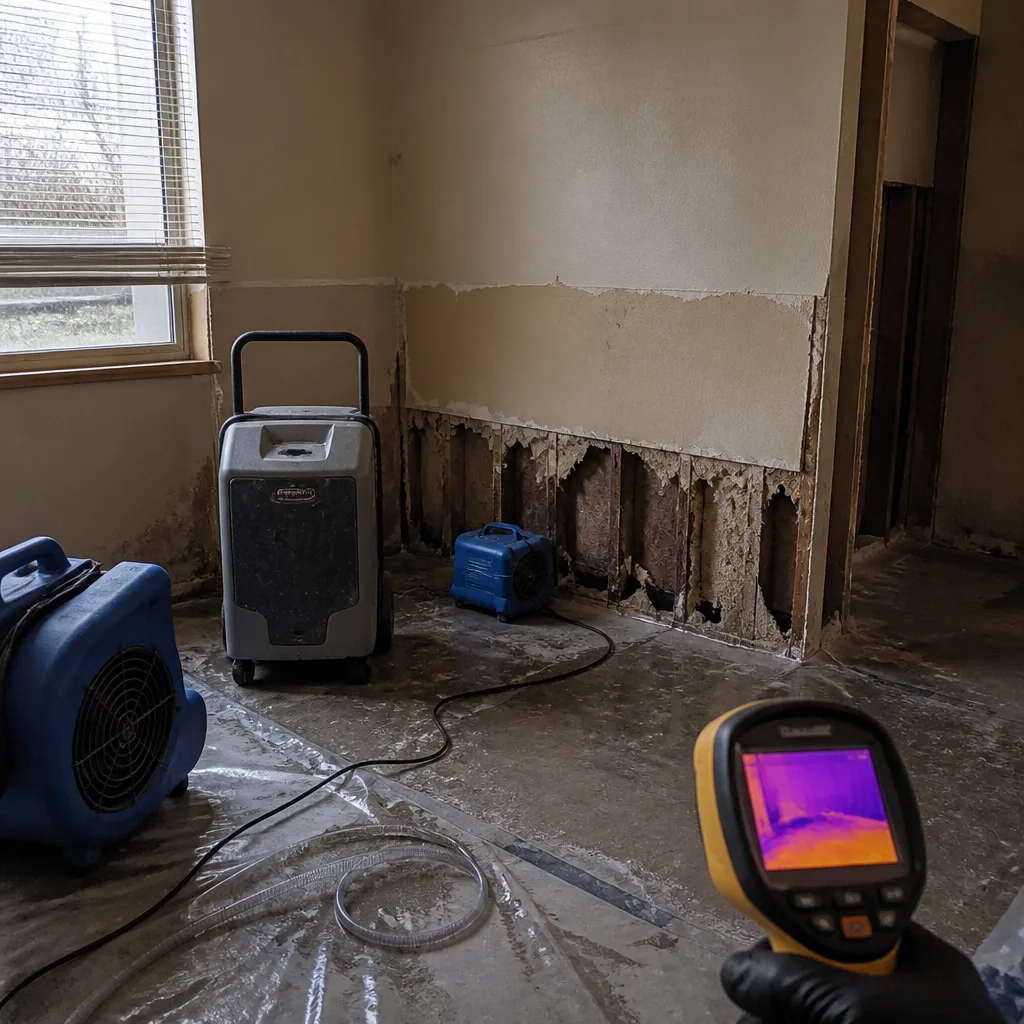 Before
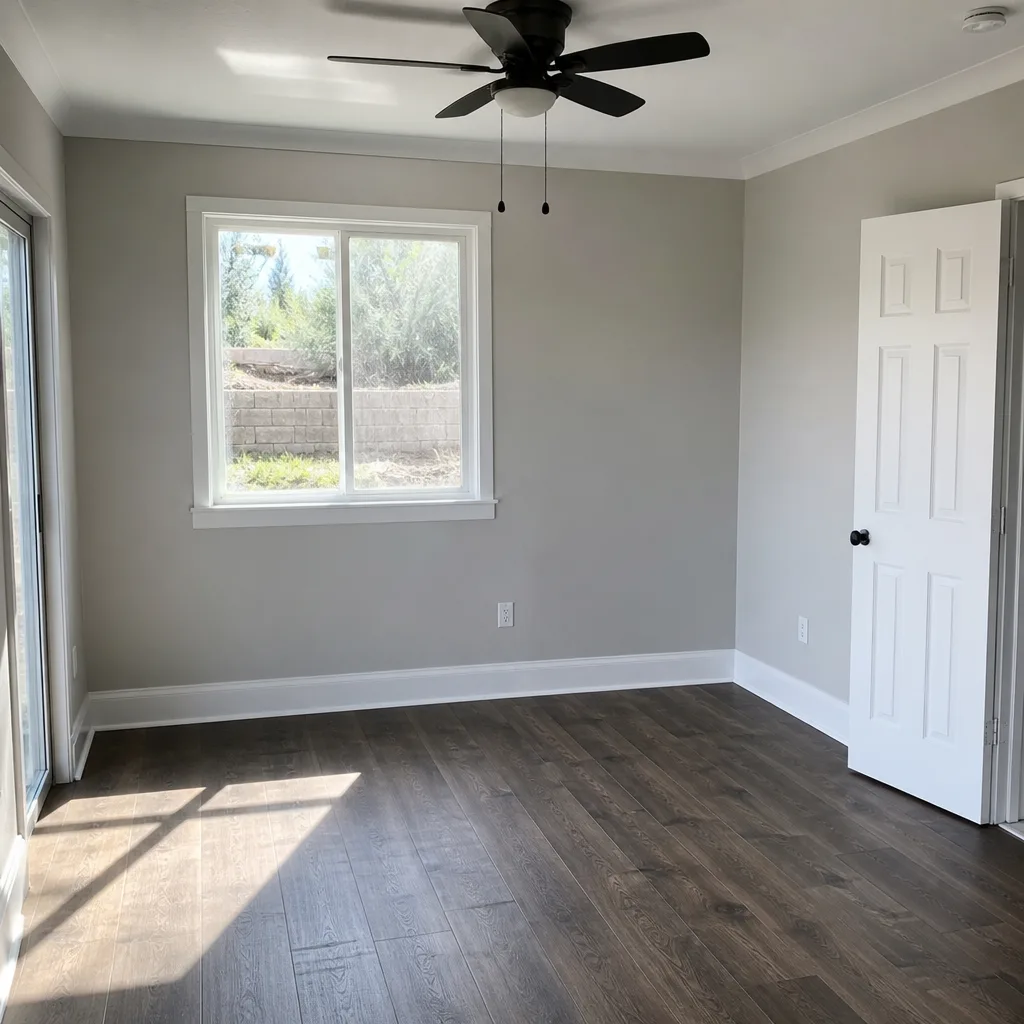 After
After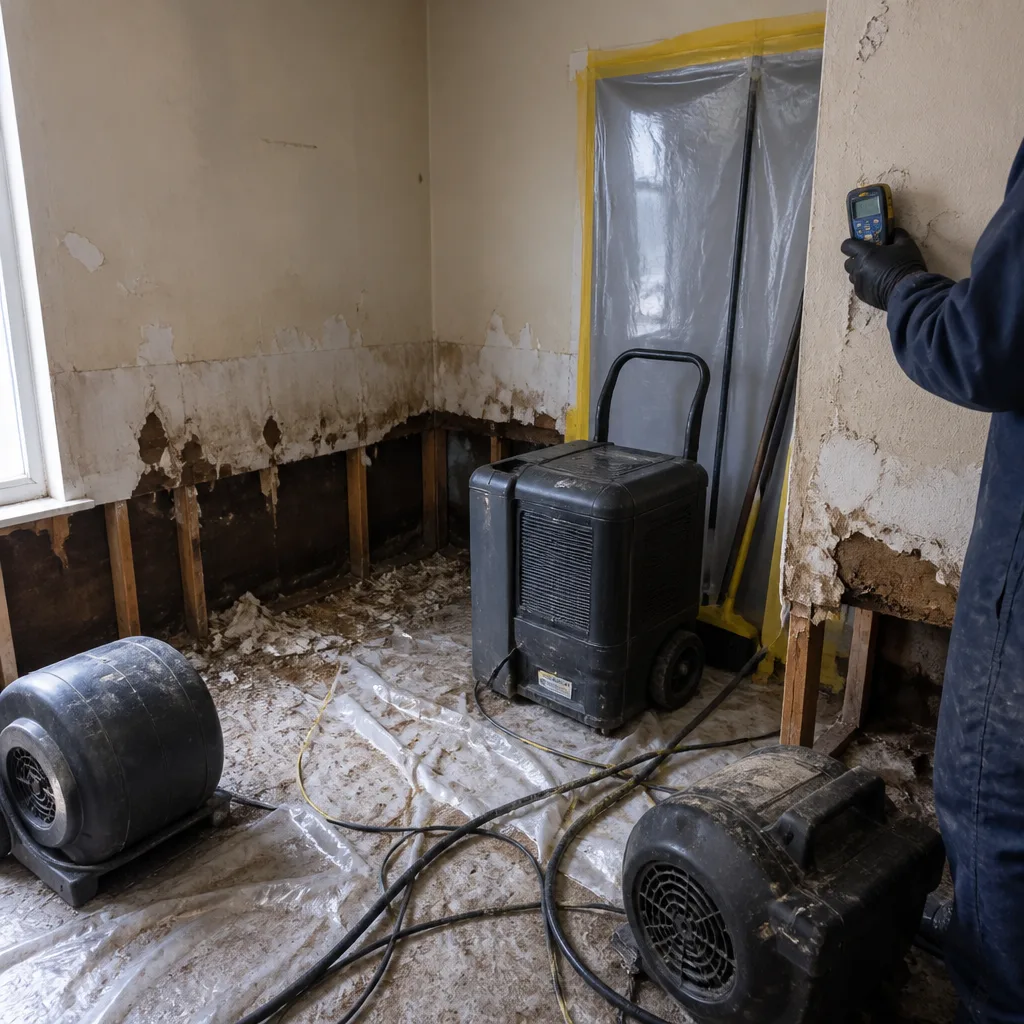 Before
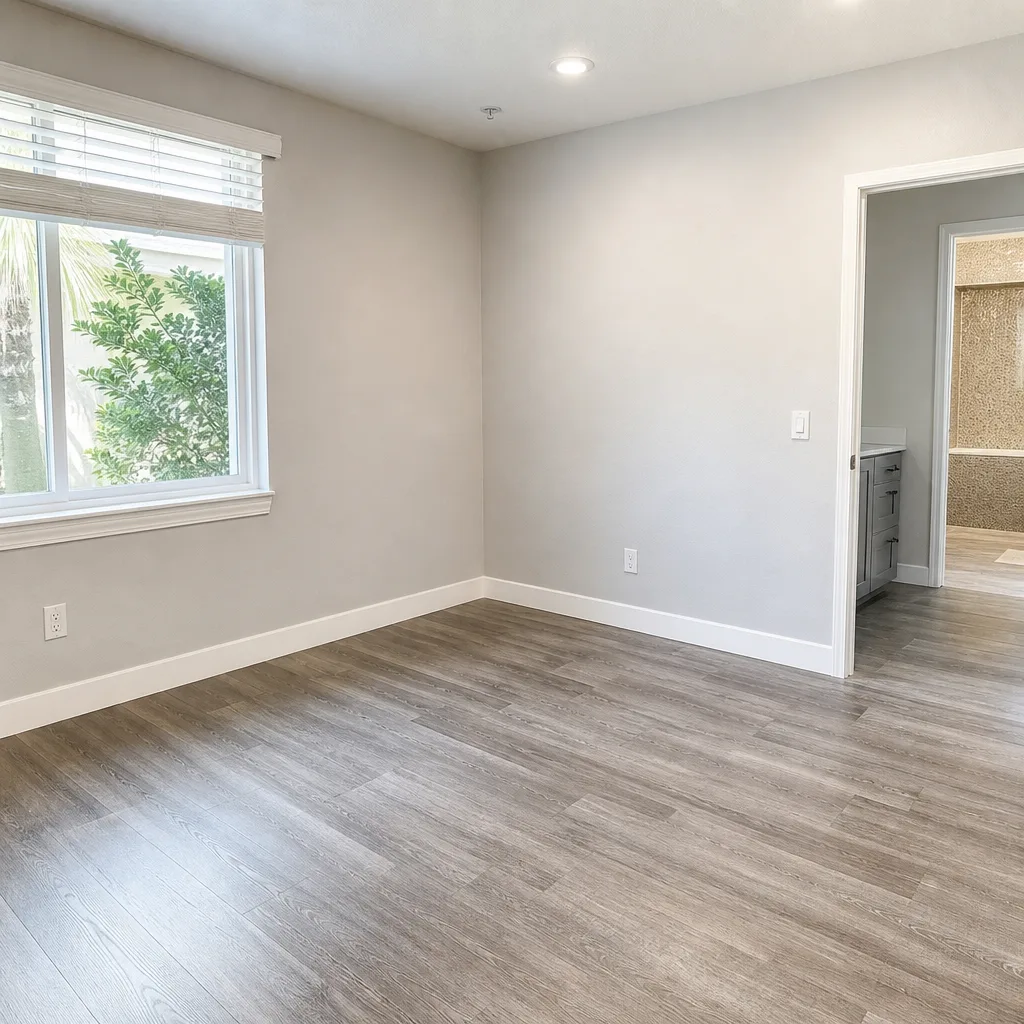 After
AfterDamage Restoration Warning Signs: A Vista Homeowner’s Reference Guide
A musty odor means active mold growth has likely been underway for 48 to 72 hours minimum. By the time a Vista homeowner smells it, the remediation scope has already doubled from what early moisture detection would have required. Most guides & resources tell you to watch for stains, warping, and visible mold. Those are late-stage signals. This reference guide focuses on the earlier, measurable indicators you can detect with a $30 infrared thermometer and a systematic room scan, catching damage when documentation still creates options rather than obligations. Vista’s semi-arid climate and specific construction patterns from the 1980s and 1990s tract booms create predictable failure points that show themselves first in numbers, not in smell.
Quick Answer
The earliest warning signs of water, mold, or structural damage in a Vista home are measurable: wall surface temperature differentials of 3°F or more from surrounding areas, humidity readings above 60% RH in enclosed spaces, and floor deflection under normal foot traffic. These indicators appear before visible staining or odor and can be detected with basic tools in under 10 minutes per room.
Table of Contents
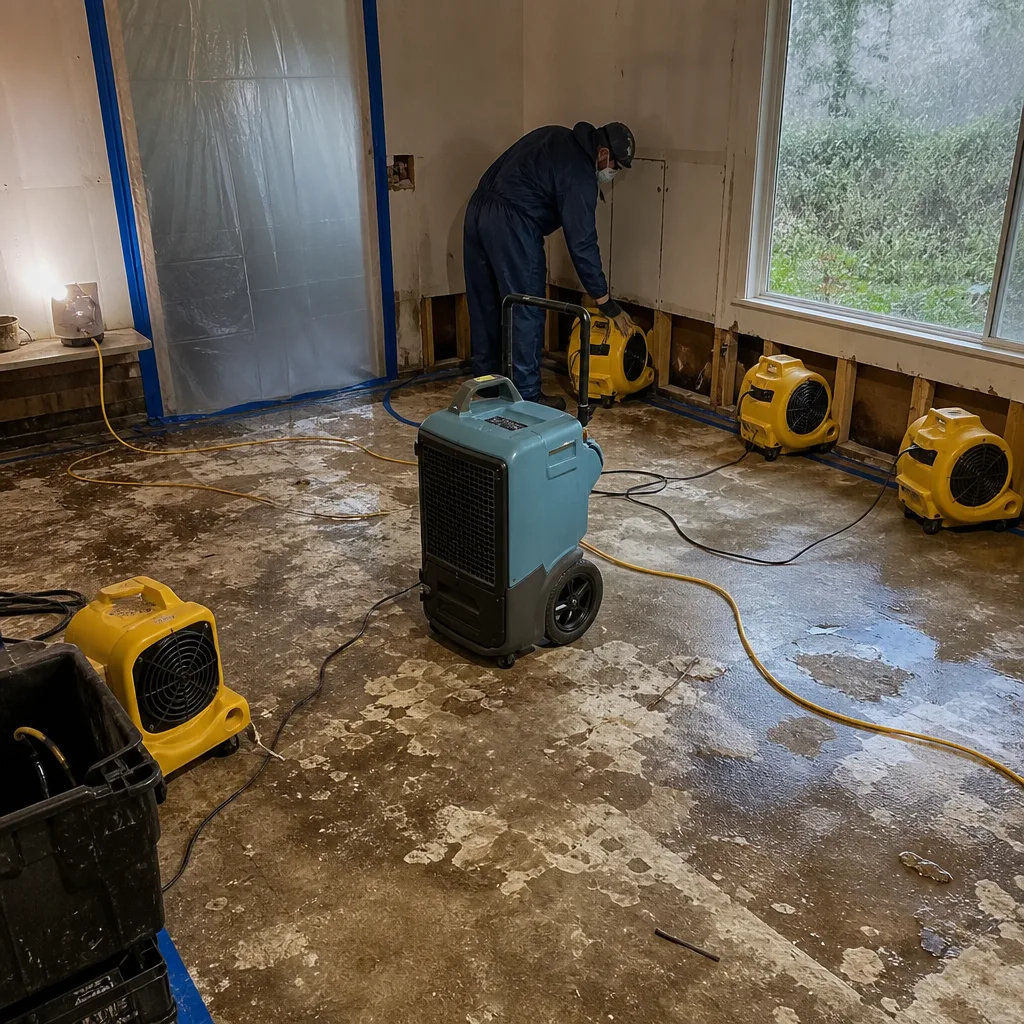
- Measurable Early Indicators: What to Detect Before You See or Smell Damage
- Vista-Specific Risk Zones: Where Your House Is Likely to Fail First
- Cosmetic Stain vs. Active Moisture Source: The Two-Minute Distinction Test
- How to Document a Warning Sign Before Calling a Contractor
- When Damage Crosses from Homeowner-Manageable to Contractor-Required Under SB 800
- Room-by-Room Systematic Scan: A 15-Minute Protocol
- Common Mistakes to Avoid
- When to Call a Professional
- Frequently Asked Questions
 Before
 After
AfterMeasurable Early Indicators: What to Detect Before You See or Smell Damage
Every restoration company in Vista will tell you to look for discoloration, bubbling paint, or a musty smell. By then, you’re already past the mitigation window where a few hundred dollars of drying equipment prevents a multi-thousand-dollar rebuild. The indicators below appear earlier and can be measured objectively.
Wall Surface Temperature Differentials
An infrared thermometer, available for $25 to $35 at any hardware store in Vista, reveals what your eyes cannot. Wet or moisture-laden drywall conducts heat differently than dry material. Scan interior walls on a day when your HVAC has been running steadily. A surface temperature reading 3°F or more below the surrounding wall area indicates evaporative cooling at that spot, meaning moisture is present and actively changing state from liquid to vapor. We regularly find these differentials in Vista homes along the north-facing walls of bedrooms, where morning condensation meets inadequate exterior drainage.
In one documented case in the Shadowridge area, a homeowner detected a 4.7°F differential on a hallway wall three weeks before any visible staining appeared. The source was a failed shower pan in the adjacent bathroom. Early detection allowed targeted drying with Injectidry panel systems and avoided the full gut that delayed moisture would have required.
Humidity Readings Above 60% RH in Enclosed Spaces
Relative humidity above 60% in a closed closet, cabinet, or wall cavity supports mold germination within 48 to 72 hours. Vista’s average outdoor humidity hovers near 55%, but enclosed spaces with even minor moisture intrusion can spike well above this threshold. A $15 digital hygrometer left in your under-sink cabinet for 48 hours tells you more than a visual inspection.
Psychrometric data, the study of air-moisture relationships, shows that at 70°F and 65% RH, mold spores on organic surfaces have sufficient water activity to colonize. At 80% RH, the timeline compresses to under 24 hours. These are not opinions. They are the documented standards that guide IICRC water damage restoration protocols.
Floor Deflection Under Load
Walk the perimeter of each room slowly, placing your full weight near walls and at transitions between flooring types. A floor that flexes more than 1/16 inch under normal body weight, or that produces a hollow sound when tapped, indicates either subfloor moisture degradation or, in slab-on-grade construction common in Vista’s 1990s developments, potential under-slab plumbing failure. Document the exact locations with photos showing your foot placement and any visible gap.
Tile floors deserve special attention. A tile that sounds hollow when tapped with a coin, or grout that crumbles under light pressure, often signals that the thinset bed beneath has lost adhesion due to moisture. In Vista’s alkaline soil conditions, this frequently traces to irrigation overspray against slab edges or failed exterior waterproofing at the stucco weep screed.
Vapor Pressure Differential: The Hidden Driver
Vapor pressure differential, the force that drives moisture through materials, explains why damage appears where it does. When the vapor pressure inside a wall cavity exceeds the pressure in the conditioned space, moisture moves outward through drywall, paint, and sealants. A homeowner cannot measure vapor pressure directly, but you can measure its effects: condensation on the cool side of the vapor barrier, salt efflorescence on concrete surfaces, and the temperature differentials described above. Understanding this relationship helps you interpret what your tools are telling you.
Vista-Specific Risk Zones: Where Your House Is Likely to Fail First
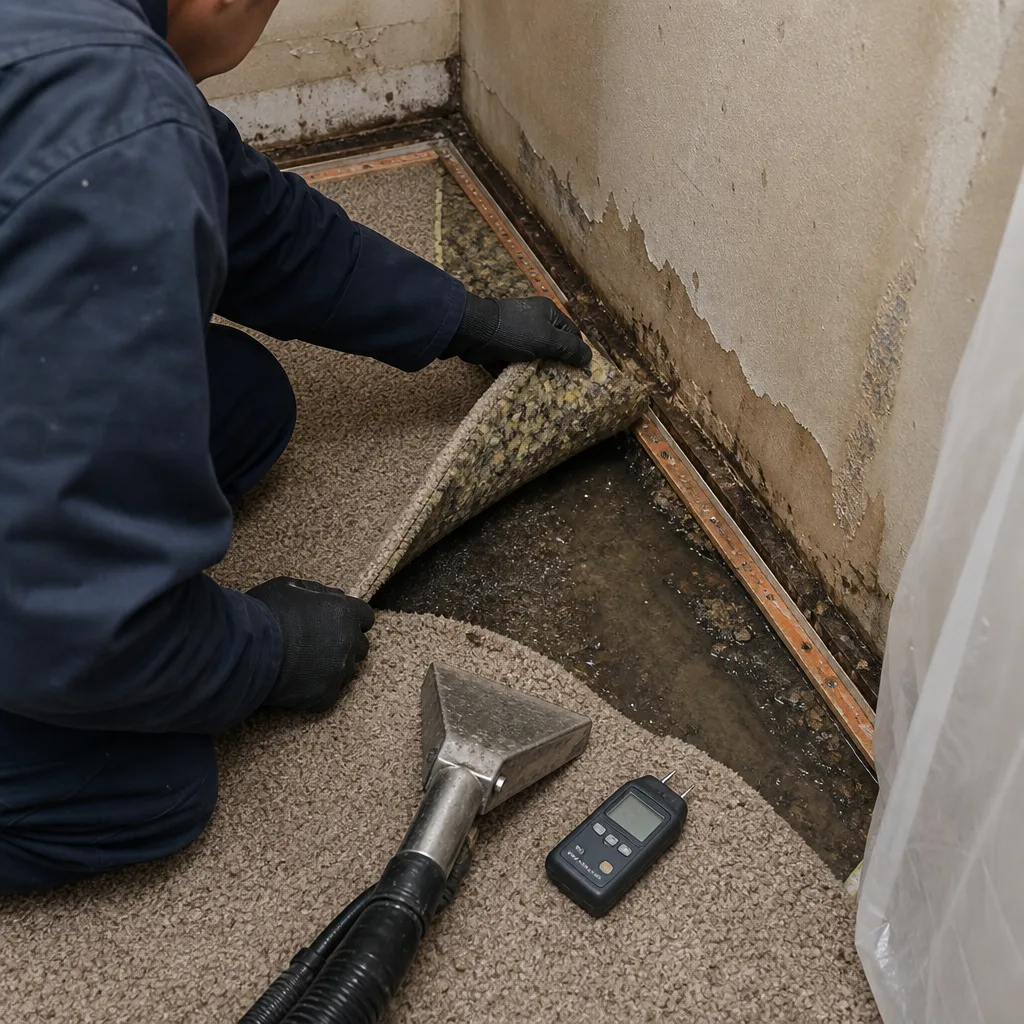
Vista’s housing stock carries specific vulnerabilities tied to its construction era, soil conditions, and climate patterns. These are not generic risk factors. They are the patterns we document on drying logs across hundreds of Vista jobs.
Stucco Weep Screed at Foundation Line
California building codes require a weep screed, a perforated metal strip, at the base of stucco walls to allow drainage and ventilation. In Vista’s 1980s and 1990s tract construction, weep screeds were frequently buried below grade during landscaping or omitted entirely at patio slabs. When the weep screed is blocked, water that enters the stucco system through cracks or failed sealants has no exit path. It accumulates in the wall cavity, wicks into the sill plate, and creates the exact moisture conditions that produce the temperature differentials described above.
Inspect your foundation line after rain or irrigation. The weep screed should be visible and unobstructed for its full length. If you see stucco extending to ground level, or if landscaping mulch contacts the wall surface, you have a blocked drainage path and elevated risk.
Roof-to-Wall Intersections in 1980s-1990s Tract Construction
Vista’s rapid growth during this period relied on production framing techniques that prioritized speed over flashing detail. Roof-to-wall intersections, particularly where second-story walls meet first-story roofs in split-level designs common in the Melrose and Vista Valley areas, often lack proper step flashing or use caulk-dependent sealant joints that fail within 10 to 15 years. The resulting leaks travel along top plates and appear as stains on ceiling drywall feet from the actual penetration point.
These leaks are especially insidious because they activate only during wind-driven rain from specific directions. A homeowner who inspects only during calm weather misses them entirely. We recommend checking attic spaces at these intersections during or immediately after a storm from the southwest, Vista’s prevailing winter storm direction.
Under-Slab Plumbing Failure Patterns
Vista’s expansive clay soils, particularly in areas east of Emerald Drive, create differential settlement that stresses copper and early PEX plumbing runs. Slab leaks in these areas typically announce themselves not through visible water but through hot spots on the floor (from hot-water line leaks), unexplained water bill increases, or the floor deflection described earlier. A thermal camera rental, available for approximately $50 daily, reveals hot-water line leaks as distinct warm lines on the slab surface.
The critical documentation point: slab leaks often produce moisture that migrates laterally under the slab rather than upward through it. The visible signs may appear at a wall base 20 feet from the actual leak. This is why moisture mapping, not visual inspection, determines the full scope.
Garage-to-Living-Space Transitions
Vista’s attached garage construction frequently omits proper sill seal and vapor barrier at the garage-to-house wall, or installs them incompletely at utility penetrations. Vehicle exhaust, stored chemical vapors, and temperature differentials between garage and living space create pressure differentials that drive contaminants and moisture through these gaps. The warning sign is often a persistent odor in the room above or adjacent to the garage, or elevated humidity readings in that room despite normal conditions elsewhere.
Cosmetic Stain vs. Active Moisture Source: The Two-Minute Distinction Test
Not every stain means active damage. A stain from a resolved roof leak five years ago may be entirely cosmetic, while a faint discoloration with no visible wetness can conceal an active moisture source that is currently destroying framing. Distinguishing these cases in under two minutes prevents both unnecessary alarm and dangerous complacency.
- Touch the center of the stain with the back of your hand. Active moisture sources feel cooler than surrounding surfaces due to evaporative cooling. If the stain area is perceptibly cooler, proceed to step 2. If temperature is uniform and the stain has sharp, unchanging edges, it is likely historic and cosmetic.
- Press a 4-inch square of aluminum foil firmly against the stain with painter’s tape on all four edges. Leave it for 60 seconds, then remove and immediately check the wall-facing side of the foil. Condensation or visible moisture on the foil confirms active vapor drive from behind the surface. This is the single test that distinguishes active from historic in under two minutes.
- If the foil test is positive, take a moisture meter reading if available, or mark the stain perimeter with a pencil and photograph it with a ruler in frame for scale. Re-check in 24 hours. Expansion of the stained area confirms an ongoing source.
The distinction matters for your claim timeline. A cosmetic stain requires no restoration work. An active moisture source with documented expansion triggers coverage obligations under most homeowners policies, but only if documentation establishes when the damage began and that it was not long-term neglect. The foil test, photographed with timestamp metadata, provides that documentation.
In our experience across Vista, approximately 40% of stains that homeowners assume are “old” test positive for active moisture. The most common source is a slow plumbing leak inside a wall, producing less than a gallon per day but continuous wetting that destroys framing over months.
How to Document a Warning Sign Before Calling a Contractor
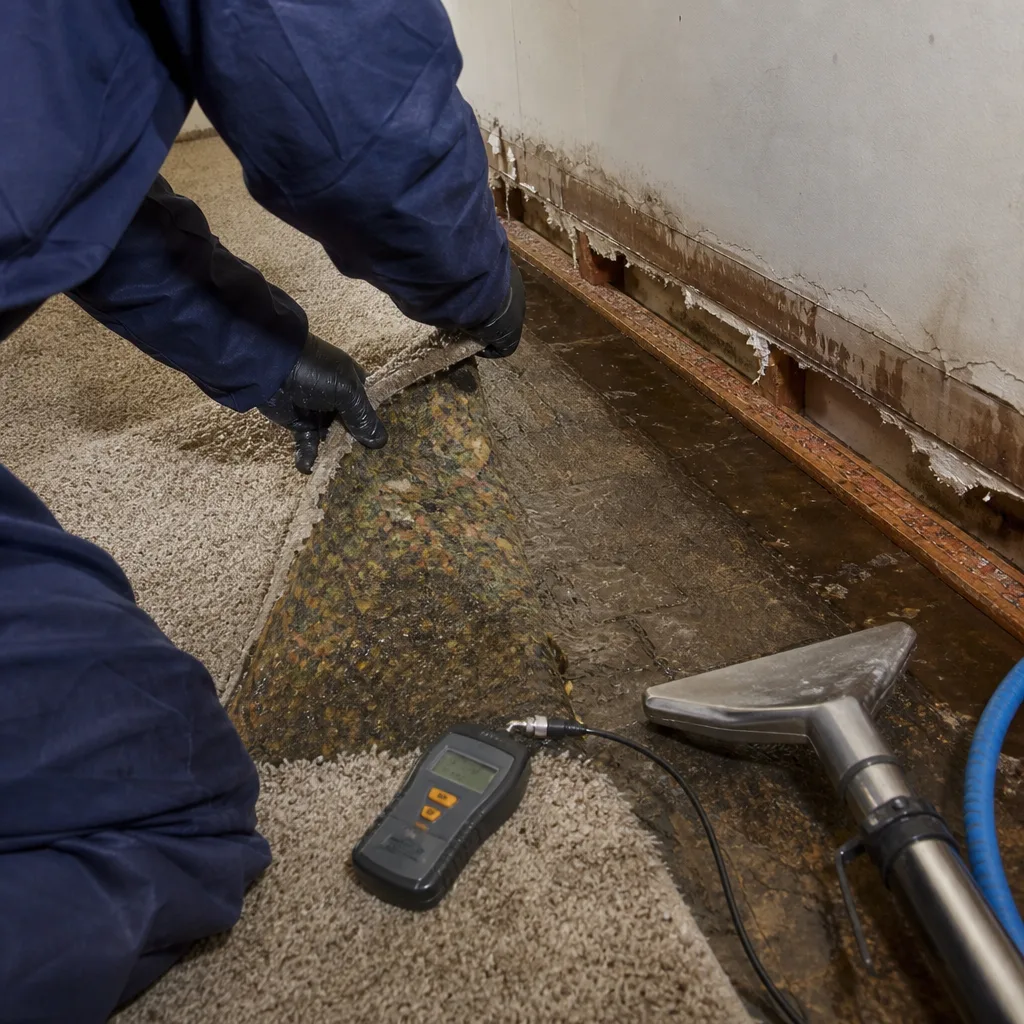
The documentation you create before any contractor arrives determines whether your insurer treats the damage as a covered sudden event or excludes it as long-term maintenance neglect. Back to Dry Restoration was founded in 2011 by a former claims adjuster specifically to close this documentation gap. The procedures below align with what insurers actually require, not with what contractors typically provide.
Photo Metadata Requirements
Every photo must contain: the date and time (enable location services on your phone camera), a visible measurement reference (ruler or tape measure), and a contextual shot showing the room or exterior area for location identification. Take three photos minimum: a wide context shot, a medium shot of the affected area, and a close-up with measurement reference.
Email these photos to yourself immediately, creating a timestamped record independent of your phone storage. Cloud backup services sometimes strip or alter metadata; email preserves it.
Moisture Reading Record
If you have purchased a pin-type moisture meter ($30 to $50), record: the specific location (measured from a fixed reference point like a door frame corner), the reading in percentage moisture content, the meter setting (wood scale vs. drywall scale), and the ambient temperature and relative humidity at the time of reading. A reading of 16% or higher on the wood scale in structural framing, or above 1% on the reference scale for drywall, indicates moisture levels that support mold growth and require professional drying.
Without a meter, document the foil test result, the temperature differential reading and location, and the hygrometer reading from the affected space. These substitute measurements establish a baseline that professionals can verify or refute with calibrated equipment.
The Written Timeline
Create a simple document with: when you first noticed the indicator, what weather or usage events preceded it (rainstorm, irrigation system activation, guest shower use), what you have observed since, and what you have done. This timeline, signed and dated, becomes evidence if coverage disputes arise. Insurers routinely deny claims where the homeowner’s testimony about timing is unsupported by contemporaneous documentation.
At DryMark Restoration Vista home, we provide a free documentation template that Vista homeowners can use before calling any contractor, including us. The template produces a record that satisfies standard adjuster review requirements.
When Damage Crosses from Homeowner-Manageable to Contractor-Required Under SB 800
California’s SB 800, the Right to Repair Act, establishes standards for construction defect claims and, by implication, defines when water or mold damage exceeds what a reasonable homeowner can address without professional intervention. Understanding this threshold-covered in our DIY vs Professional Damage Restoration: The Vista Homeowner’s Decision Guide-protects you from both unsafe DIY attempts and unnecessary contractor engagement.
SB 800 identifies specific categories of damage that trigger statutory repair obligations: water intrusion through exterior envelope failures, mold growth exceeding 10 square feet in any contiguous area, and structural damage affecting load-bearing elements. For insurance and liability purposes, these same thresholds generally mark the boundary between homeowner-manageable and contractor-required work.
The practical implications for Vista homeowners:
- Water extraction from a single-room overflow, where the water is clean and the affected area is under 50 square feet, can be homeowner-managed with proper extraction, airflow, and dehumidification. Exceed any of these parameters, and professional drying with documented psychrometric data becomes necessary for insurance coverage.
- Mold on a single bathroom tile grout line can be cleaned with appropriate PPE and antimicrobial. Mold on drywall, or any contiguous area exceeding 10 square feet, requires containment, negative air pressure, and HEPA filtration under IICRC S520 standards. Attempting this without proper containment spreads spores and voids most homeowners policy mold coverage.
- Structural drying, defined as drying of framing members below 15% moisture content, requires calibrated equipment and daily moisture logs that homeowners cannot produce. Without these logs, insurers classify subsequent mold or rot as maintenance neglect.
The Haven Standard, Clause 1, requires that we provide a written price before any work begins, every time. This applies even to situations where the homeowner initially believed the damage was manageable. We have reviewed hundreds of Vista jobs where a homeowner attempted extraction with a wet-dry vacuum, believed the area was dry, and discovered months later that moisture readings in the subfloor remained above 20%. The subsequent mold remediation, uninsured due to lack of professional documentation, cost 8 to 12 times what proper initial drying would have required.
Room-by-Room Systematic Scan: A 15-Minute Protocol
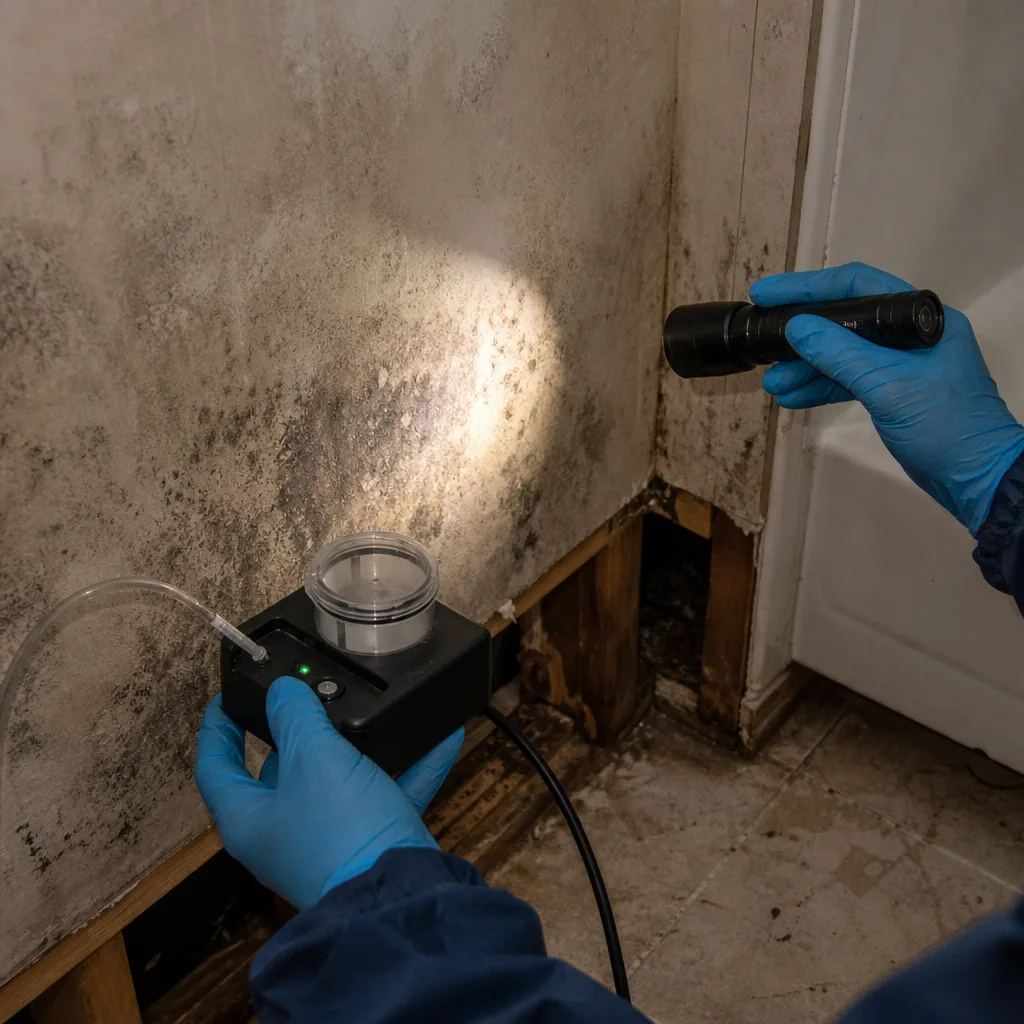
The following protocol, performed monthly as part of seasonal damage restoration care for Vista, catches the early indicators described in this guide before they progress to visible damage. Total time for a 2,000-square-foot home: approximately 15 minutes once you are familiar with the procedure.
- Exterior perimeter (3 minutes): Walk the foundation line with your infrared thermometer. Note any temperature differentials at the base of walls. Check weep screed visibility. Inspect roof-to-wall intersections with binoculars for missing or displaced flashing. Photograph any anomalies.
- Kitchen and bathrooms (4 minutes): Place the back of your hand on cabinet bases under sinks. Check for cool spots indicating supply line condensation or slow drain leaks. Run water in each fixture for 30 seconds, then check cabinet interiors with your hand for temperature change. Inspect toilet bases for rocking or caulk separation. Check tile floors with the coin-tap method described earlier.
- Laundry and utility areas (2 minutes): Inspect washing machine supply hoses for blistering or corrosion at connections. Check water heater pan for standing water or rust. Note any rust streaks on the TPR valve discharge pipe.
- Bedrooms and living areas (4 minutes): Scan walls with infrared thermometer, paying special attention to north-facing walls and walls adjacent to plumbing. Check closet floors and corners with your hand for coolness or softness. Walk perimeter floors for deflection.
- Garage and attic access (2 minutes): Check garage-to-house wall base for staining or salt deposits. If safely accessible, check attic at roof-to-wall intersections for dampness or darkened sheathing.
Record findings in a simple log: date, location, indicator, measurement if applicable, and photo reference number. This log, maintained over time, establishes patterns that single inspections cannot reveal. A cool spot that appears only after winter storms, for example, indicates an intermittent leak that professional inspection during dry weather might miss.
Common Mistakes to Avoid
- Waiting for visible mold before acting. Mold becomes visible at approximately 10 to 14 days of growth in favorable conditions. By then, remediation scope includes not just surface treatment but often drywall removal, insulation replacement, and HEPA air scrubbing. Early moisture detection prevents this escalation.
- Using bleach on suspected mold. Bleach does not penetrate porous materials and can add moisture that worsens the problem. It also produces no documentation that an insurer will accept as proper remediation. For areas under 10 square feet, use an EPA-registered antimicrobial; for larger areas, professional containment is required.
- Assuming a dehumidifier alone will resolve wall cavity moisture. Dehumidifiers reduce ambient humidity but cannot extract moisture from within wall cavities where vapor pressure differentials drive hidden wetting. Professional drying uses Injectidry and similar systems to create airflow within cavities, documented with daily moisture logs to IICRC standards.
- Ignoring seasonal patterns in Vista’s climate. Santa Ana wind events, common October through April, create unusual pressure differentials that drive moisture and contaminants through small envelope breaches that remain sealed during normal conditions. Inspections during these events reveal leaks invisible at other times.
- Failing to document before cleanup. Every minute of delay in documentation after discovering damage reduces claim recoverability. Photograph before you extract, before you move contents, and before you cut or remove any material. Insurers routinely deny claims where the cause and extent cannot be independently verified.
- Accepting verbal estimates or scope descriptions. Haven Standard, Clause 1, exists because verbal pricing and scope descriptions are unenforceable and frequently disputed. Any contractor who will not provide a written price before work begins is not operating to a standard that protects your claim.
- Overlooking irrigation system impact. Vista’s water conservation requirements have led many homeowners to convert to drip irrigation with emitters placed near foundations. Misplaced emitters create concentrated soil moisture that wicks through slab edges and produces the exact conditions for subfloor damage. Check emitter placement quarterly.
When to Call a Professional
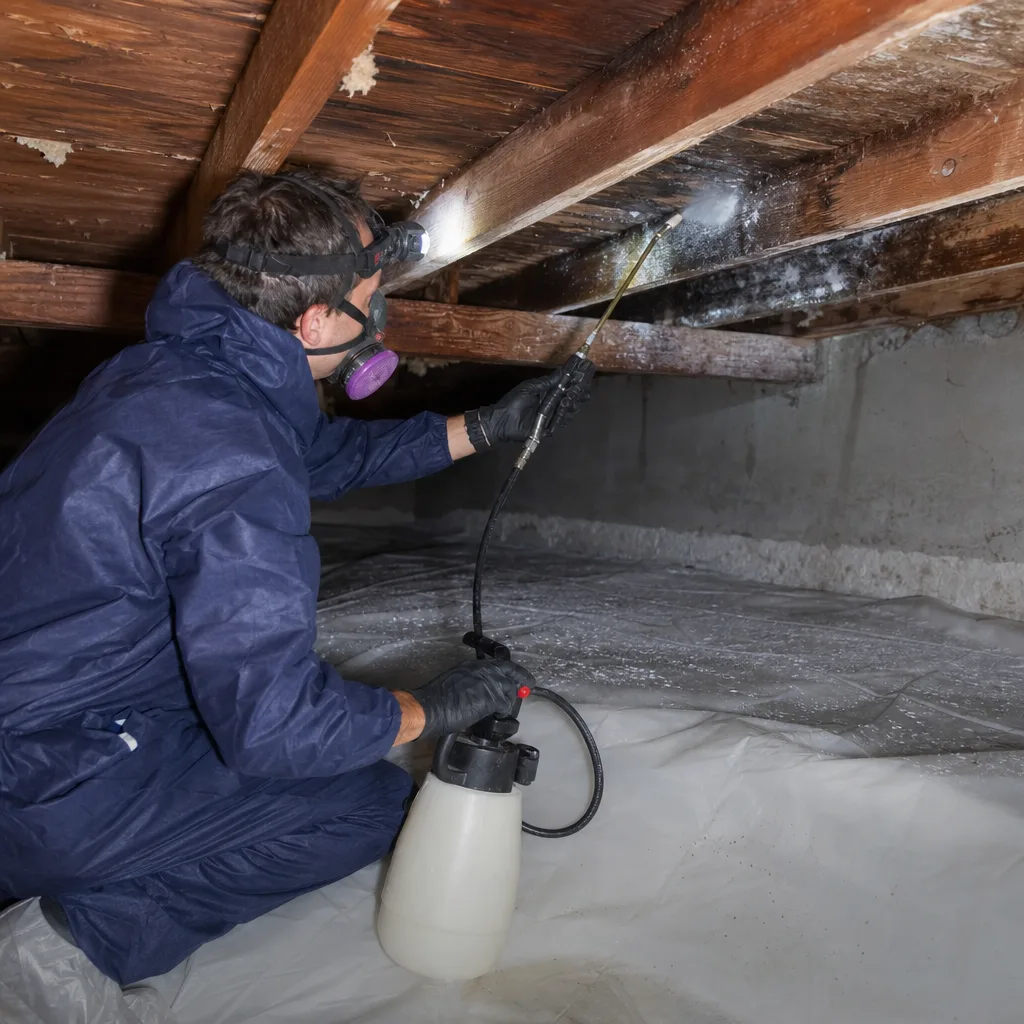
Call a professional restoration contractor when: the foil test confirms active moisture behind any finished surface; moisture meter readings exceed 16% on wood or 1% on drywall reference scale; mold growth exceeds 10 contiguous square feet; water intrusion involves Category 2 (gray water) or Category 3 (black water) sources; or structural members show visible deformation or decay. These thresholds align with both safety requirements and insurance coverage standards.
Speed matters for mitigation, not for reconstruction. Water damage stops getting worse when the source is controlled and drying begins, but the decision to proceed should never be rushed. A professional who pressures for immediate work authorization without a written scope and price is not following IICRC protocol or protecting your interests.
Water Damage Restoration in Vista from DryMark Restoration Vista includes documented assessment, written pricing before work begins, and daily moisture logs using professional-grade Dri-Eaz and B-Air equipment. We offer free estimates throughout Vista - call (760) 539-8990 to schedule. Our live dispatch answers 24 hours a day, 7 days a week with no voicemail on emergency lines.
Frequently Asked Questions
Initial moisture mapping and assessment typically ranges from $150 to $350, with emergency response fees of $75 to $150 for after-hours calls. Structural drying with professional-grade equipment runs $35 to $55 per day per dehumidifier and $25 to $40 per day per air mover, with most residential jobs requiring 3 to 5 days of equipment rental. DryMark Restoration Vista provides a written price before any work begins, every time, under Haven Standard, Clause 1. Call (760) 539-8990 for an exact quote - estimates are free.
Coverage depends on documentation, not speed of calling. Insurers deny claims for long-term neglect, defined as damage that progressed over weeks or months without homeowner action. A dated log of your detection, with photos and measurements, establishes that you identified and responded to the damage promptly. Without this documentation, the insurer assumes the damage predated your awareness. We recommend documenting immediately, then calling within 24 hours for professional assessment.
A pre-purchase inspection establishes baseline conditions but does not prove damage timing. Insurers may argue that conditions existed but were not detected. For new damage claims, you need contemporaneous documentation of the event or indicator that caused the damage: storm dates, plumbing failure times, or the dated detection log described in this guide. We provide free second opinions on any competitor’s written estimate, including documentation review for coverage support.
Surface mold on non-porous materials (tile, glass, metal) in areas under 10 square feet can be cleaned by the homeowner with proper PPE and an EPA-registered antimicrobial. Mold on porous materials (drywall, carpet, ceiling tile), mold in HVAC systems, or any contiguous area exceeding 10 square feet requires professional containment, negative air pressure, and HEPA filtration under IICRC S520 standards. Attempting large-area remediation without containment spreads spores and typically voids insurance coverage for subsequent professional work.
Live dispatch answers every call 24 hours a day, 7 days a week with no voicemail. Emergency response for active water intrusion is typically under 90 minutes within Vista city limits. Reconstruction and non-emergency assessment are scheduled, not dispatched, with written scopes and pricing provided before any work begins. Speed language applies to mitigation only; rebuild work is scoped and scheduled like any professional construction project.
The distinction depends on water category, affected materials, and drying timeline. Category 1 (clean water) on hard surfaces, addressed within 24 to 48 hours, typically requires extraction and drying only. Category 2 or 3 water, any porous material saturation, or delays beyond 48 hours generally require removal of affected materials and antimicrobial treatment. The single most important factor is documented moisture content: materials that cannot be dried to below 15% moisture content within 72 hours must be removed. Our assessments include written moisture targets and daily logs to prove when these thresholds are met.
The Bottom Line
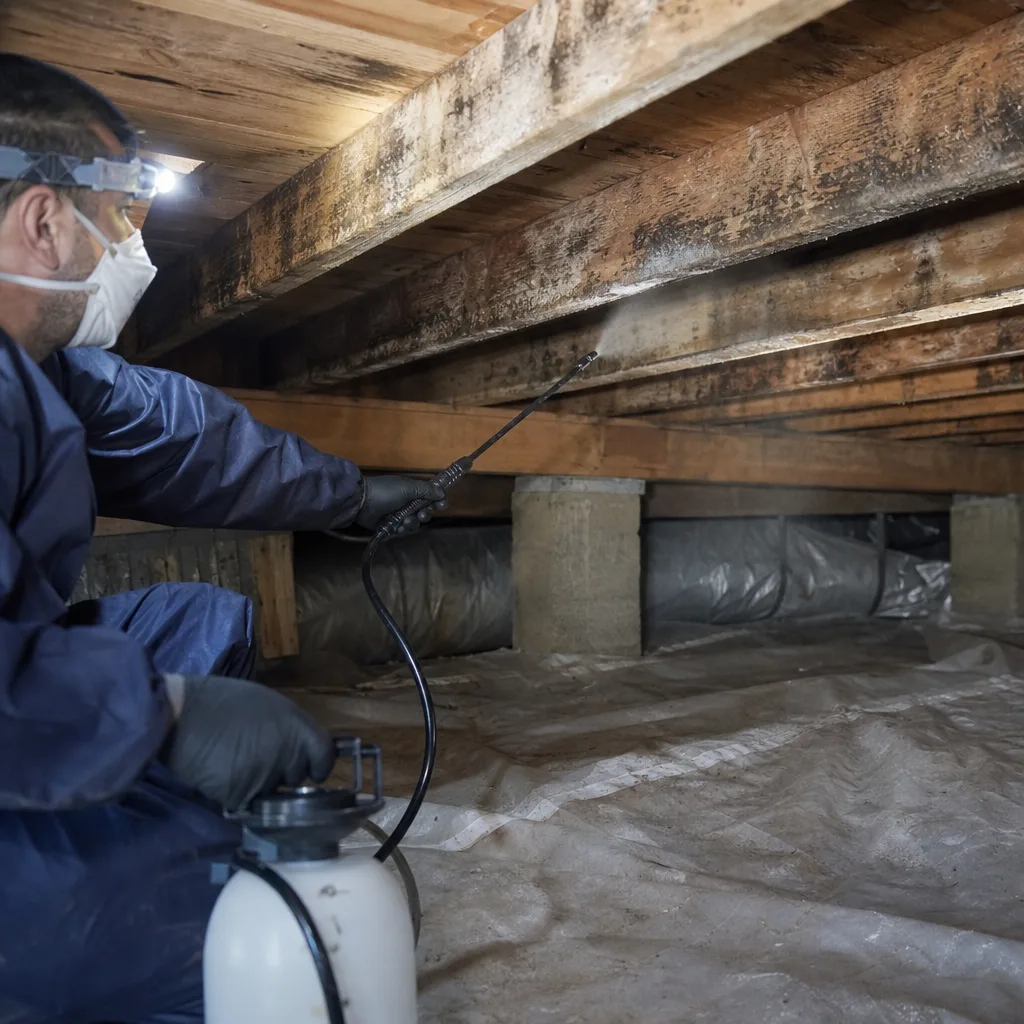
The warning signs that matter most are measurable, not visible. A $30 infrared thermometer and 15 minutes of systematic scanning each month will detect moisture problems in your Vista home weeks before stains, odors, or mold appear. When you find an indicator, document it with dated photos, measurements, and a written timeline before calling any contractor. This documentation transforms a potential claim dispute into a straightforward coverage determination. For damage that exceeds homeowner-manageable thresholds, professional assessment with written pricing, documented drying logs, and photo records on every visit protects both your property and your financial recovery. The goal is never to sell you work you don’t need. It is to ensure that when work is needed, the documentation exists to get it paid.
Written by Alicia Brennan, Owner at DryMark Restoration Vista, serving Vista since 2011.